

Conversations with Poets - Felicity
- Sawiya
- Mar 10, 2014
- 7 min read
Updated: Apr 17, 2019

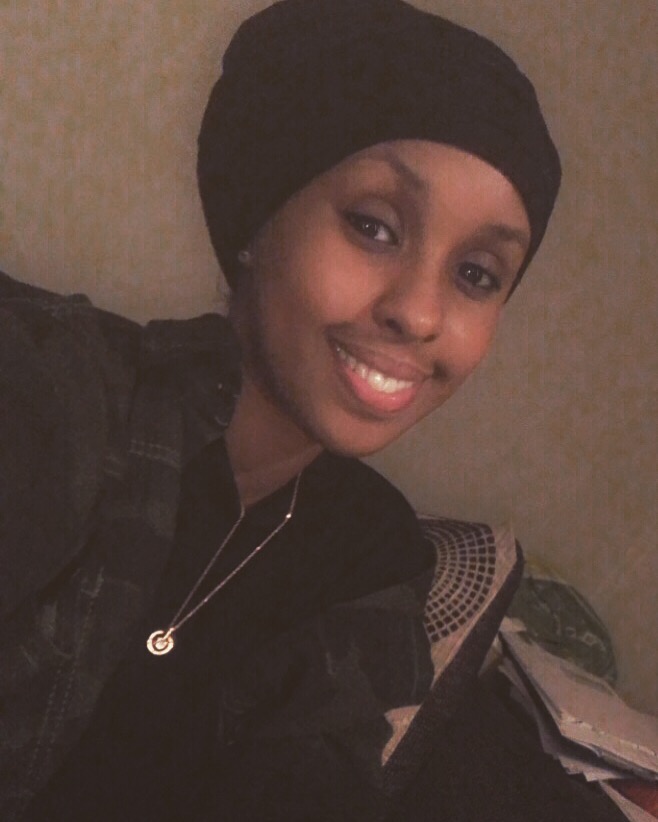
I met Felicity Allimadi briefly a couple of months ago before meeting her to conduct this interview. The conversation we had stuck with me for so long. She approached me one day and asked me to answer a few questions about the topic of ‘racism’. I was more than happy to give her my time and talk to her. I remember she told me something which was very interesting. In order for her to write poetry, she talks to people because that’s what helps her the most. She feels like hearing other people’s thoughts will enable her to start writing and gain ideas.
So when I finally started this blog, I remembered Felicity straight away and managed to track her down by talking to her friend, because I had lost her email address by accident. Once I finally got her email address and number, we arranged to meet up and we talked for hours about her passion for poetry, her thoughts, her inspirations and so on.
Felicity defines poetry as true self-expression, like “you are opening your soul even further.” She sees poetry as the depths of your feelings, thoughts and everything you experience.
“When you are having a conversation with someone,” she said, “they won’t know the depths of your soul because it doesn’t come up in everyday conversation. You might talk about politics or religion for 5 minutes, but poetry gives you something deeper than that. It’s your perspective, your vision, your diary and your time to tell a story.
“You’re very vulnerable as a poet because you are opening up to the world. And there’s fear in that. But there’s also growth. Fear is growth. Pain is growth.”
In order to achieve something through poetry, Felicity uses it to reflect and to inspire. It helps her develop as a person and get her thoughts out. She told me that random lines would pop up in her mind when she’s on the bus or just walking in the street and she writes it down somewhere before she forgets. I was intrigued to ask her what triggered her to start writing.
She said: “What I write is triggered to a particular emotion. I could be angry at that point so I will write and then keep it stored somewhere. Then when I’m angry again, I will look back to what I wrote at that moment and maybe add some more. The emotion could be peaceful, happy, painful, whatever it could be.” It was interesting when she told me this as I remembered what Warsan Shire talked about in my previous blog post. Each poet has their own way of writing, like a sign that tells them to start. With Felicity however, although her poems can start with a certain thought or emotion, it takes her a while to perfect and edit them.
“I am a perfectionist. I don’t appreciate artists who just release their work after they had written it yesterday. My poetry tracks could take years, months or days to write. It’s all about the quality.”
I’ve noticed she was a very reflective person during our interview. She took her time to think before answering by taking long pauses to really give me thoughtful, anecdotal explanations.
“I remember someone once told me: ‘Don’t be too smart with your words because you will bore people.’ Don’t make too much sense. It’s crazy yet very true. I realised that some of my tracks can be very heavy and can be too challenging and so I have to switch it up and make some poems funny – just so it can appeal to the audience.”
Her poetry range from topics that are heavy and some that are very light hearted. She talks about usual topics such as ‘love’ but also talks about deep topics such as racism and the state of black people today. However, she has learnt that sometimes she needs to be careful with what she is saying as a poet, what her intentions are and where she wants it to go. Felicity is keeping her poetry on the down low as she sees it as a learning experience, trying to edit and craft her poetry to the point where she feels comfortable to show the world.
“I’m not really a good promoter. I hate that. It’s just not in me. I have stacks and stacks of written lyrics from over the years and 90% of what I have written will never get released. I want to keep developing and developing so that when that time comes, I will release the best. But for the time being, I will leave it to someone who is ready.”
Spoken word poets like to use their voice only when performing or reciting their work. Felicity also does that but sometimes she likes to add music too, which I found very interesting. One of her good friends has his own studio in his bedroom, who produces amazing beats. But sometimes music doesn’t always capture the heart of the audience and Felicity herself. She recalls the time she cried on stage when she performed her poetry.
“I performed in a church a few years ago and the poem was about religion and family. I had 3 sides of A4 paper so I didn’t have time to actually learn it. I walked on stage and I was shaking so much. After drinking some water, everything was going okay for a while. Until about a minute or 2 into the poem, I just burst out crying. It really got to me. But I picked myself up and carried on. It was such a heavy topic for me at that time. So powerful.
Sometimes my voice can be enough for people to really listen. The atmosphere is the only beat.”
Sitting with Felicity and talking about poetry was amazing. I really did feel her words and passion with her answers. She has some musical inspirations from Bob Marley’s authenticity, passion and liberal lifestyle, to Lauryn Hill’s fearlessness in the music industry where she has inspired many black women to embrace and be proud of the skin they’re in. “Lauryn Hill didn’t bleach her skin, put weave in her hair, you know what I’m saying? She stayed real and when people tried to tarnish her image, she left the music business. Her lyrical ability and singing voice is amazing. She’s talented.”
In comparison to singers, Felicity feels like rappers and poets have it harder and are scrutinised so much more. With singers, most of them don’t even write their songs and they don’t have their own choreography either. They simply choose the track, learn the dance moves and just perform. But with poets, there is a lot more work that needs to be done. Not just for the audience, but for themselves.
“If a person comes up to me and asks me: ‘Why did you say that in your poem?’, I will need to explain why I said it. I will need to prepare for the questions and the scrutiny. I need to be able to back up everything I said in my poems and then think ‘well why can’t I say that? Why not?’. People want the truth. People want realness. People want openness. And it’s the poet’s job to step on that stage and give it to them.”
Going back to when she was only 10 years old, Felicity was always interested in English lessons as she knew poetry was for her. She told me about the time her teacher was marking her English work and told her: “It’s a good piece but I didn’t tell you to rhyme.” That’s when she realised that unintentionally rhyming in her written work, at the age of 10, was probably the way her mind just functions.
Even to this day, when Felicity is writing her thoughts away, she doesn’t put it in art form straight away. She simply listens to music, goes onto the computer and lets her thoughts slip out and without even realising, the words automatically start rhyming. Then later she goes back to what she has written with a fresh mind and then decides how it should be structured lyrically.
Talking to Felicity has been a pleasure as she always teaches me things and really opens up her heart to me. She is currently reading ‘The Philosophy and Opinions of Marcus Garvey’, a pan Africanist who was the first leader of the black race and led 5 million men in America in the 1920’s. Someone who Malcolm X and Martin Luther King looked up to. She is also reading about Francine Cress Welsing, an African American psychiatrist who studies theories on racism.
Felicity knows exactly who she is and she is studying the history of her roots. By talking to her for a few hours on a Thursday afternoon, I saw the passion, the determination and courage that she has. She is someone who refuses to watch TV, as she calls it the ‘’weapon of mass deception’’ which I completely agree with. She doesn’t see the reality in TV and wants to remain alert and aware at all times.
And of course, I asked her one more question.
Are you happy with the state of the world right now?
You know what, yes. I’ve realised this maybe a week or two weeks ago. It was like a new revelation to me. I’ve been very depressed lately, in fact I still am and dealing with it. I just couldn’t understand pain and suffering and why I am here… like all of these life questions and really getting to the core of reality. Why am I here to suffer? Why am I here to work? Why am I unhappy? And how is it that I see my parents suffer they’re still waking up and getting things done. I was just trying to perceive reality and be okay with it.
And then I came to this revelation recently. I started to realise that pain actually makes the world go round. Wicked and evil makes the world go around. It has brought me freedom to a degree because it’s like – not that everything is okay – but I feel like I have peace knowing that the Creator didn’t make a mistake like why did a creator who should be good create evil?
When I get a cut on my arm, that’s evil. But then when it heals, it’s good. Balance makes the world go around. If there was no happiness, there would be no growth. Pain is literally growth. So I’m not afraid of pain. There is a need for good and a need for evil. It’s about being in the middle and understanding that.


Comments